

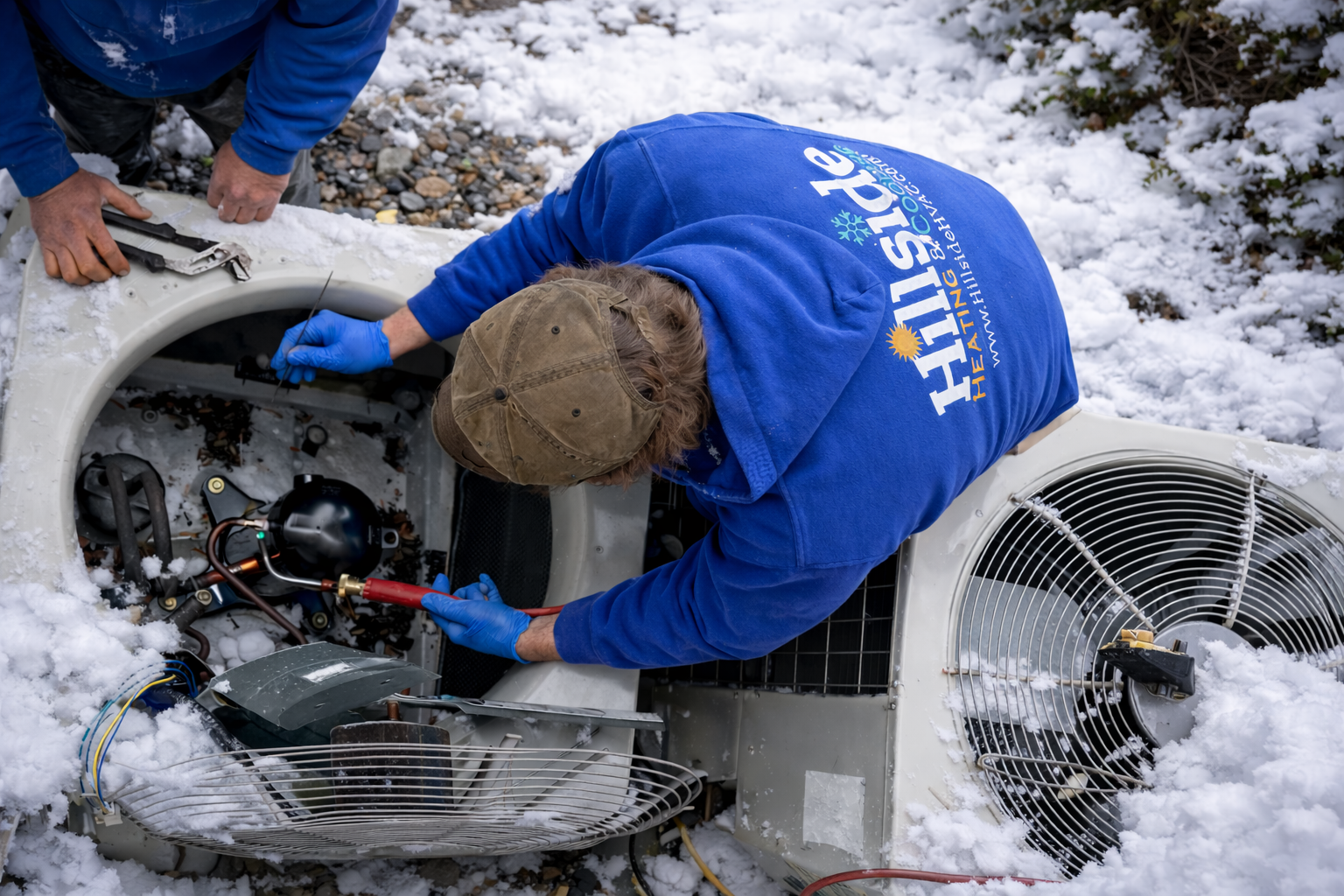
If your heat pump seems to run nonstop in February—but your home still feels cooler—you’re not imagining it.
Across Cecil County, MD, Southern Chester County, PA, and New Castle County, DE, February is often the toughest month for heat pumps. It’s when cold snaps linger, damp weather boosts defrost cycles, and systems are already worn down from months of winter runtime.
Below is a clear, homeowner-friendly breakdown of why heat pumps struggle in February, what’s normal vs. not, and what you can do right now to stay comfortable and avoid expensive surprises.
1) February is the coldest, most demanding stretch of winter
In our region, February typically brings longer stretches of low temperatures with fewer warm-ups. Heat pumps don’t create heat like a furnace—they move heat from outside to inside. The colder it gets outdoors, the harder the system has to work to extract usable heat.
What you may notice: longer run times, slower temperature recovery, and rooms that feel a little cooler—especially in the mornings and on windy days.
2) Heat pumps lose efficiency as outdoor temperatures drop
Heat pumps are most efficient when outdoor temperatures are moderate. As temperatures fall:
- There’s less heat available outdoors to pull in.
- The system must run longer to achieve the same level of comfort.
- Overall efficiency can drop, especially during extended cold spells.
This doesn’t automatically mean your system is failing—it means it’s operating under the harshest conditions of the year.
3) Defrost cycles happen more often in February
February in the Mid-Atlantic often brings a cold-and-damp combo. When it’s cold and humid, ice can build up on the outdoor coil. Your system protects itself by running a defrost cycle to melt that ice.
During defrost, you may notice:
- Cooler air from your vents for a short period
- A temporary pause in heating output
- Backup heat (aux heat) kicking on to maintain comfort
More defrost cycles = less efficient heating and more noticeable comfort swings.
4) Backup heat runs more (and your energy costs can jump)
Most heat pump systems rely on auxiliary (backup) heat when outdoor temps drop or during defrost. In many homes, that backup heat is electric resistance heat—effective, but costly.
If you see a sudden spike in your electric bill in February, backup heat is often the reason.
Occasional aux heat is normal. But if it seems like it’s running constantly, that’s a sign your system may need attention.
5) February exposes small problems that started earlier in the season
By February, your heat pump has been working hard for months. That’s when common issues become noticeable:
- Dirty filters restricting airflow
- Outdoor coil buildup (dirt, leaves, debris)
- Low refrigerant or airflow imbalance
- Thermostat settings that trigger excessive aux heat
- Systems that are undersized or ductwork that can’t deliver enough air
In other words: February is when “it’s been fine” turns into “why can’t we get warm?”
What homeowners can do right now (fast, practical steps)
Here are simple moves that can improve performance and comfort quickly:
- Change your air filter (or clean it if reusable). Restricted airflow is a major comfort killer.
- Keep outdoor units clear. Remove snow drifts and keep at least 18–24 inches of clearance around the unit.
- Avoid large thermostat jumps. Raising the temperature several degrees at once can trigger more aux heat.
- Check vents and returns. Make sure they’re open and not blocked by furniture or rugs.
- Listen and look. Unusual noises, frequent defrost, or ice that doesn’t clear can indicate a real problem.
When it’s time to call a pro (signs your system is not “just working hard”)
Call for service if you notice any of the following:
- Cold air blowing for long periods (not just briefly during defrost)
- System runs nonstop but the house won’t hold temperature
- Ice buildup that doesn’t clear on the outdoor unit
- Aux heat running constantly (or “AUX” / “EM HEAT” frequently showing on the thermostat)
- Sudden energy bill spike that doesn’t match your normal winter pattern
Heat pump issues are often fixable—especially when caught early. Waiting can turn a small performance problem into an expensive repair.
Heat Pump in February Bottom line
Heat pumps are excellent systems, but February is the hardest month for them in Cecil County, Southern Chester County, and New Castle County. Cold temps reduce efficiency, damp weather increases defrost cycles, and months of winter wear add up.
If your heat pump is struggling this February, we can help. Our team services and repairs heat pumps across the region and can diagnose whether what you’re seeing is normal winter behavior—or something that needs attention.
Need help with a struggling heat pump?
Schedule heat pump service now, and we’ll get you back to steady, reliable comfort.
DE & PA: 302-738-4144 | MD: 410-398-2146
Your Heat Pump Partner!
Call Hillside Heating and Cooling at 302-738-4144 or 410-398-2146 or contact us today!