


1. Failed Contactor
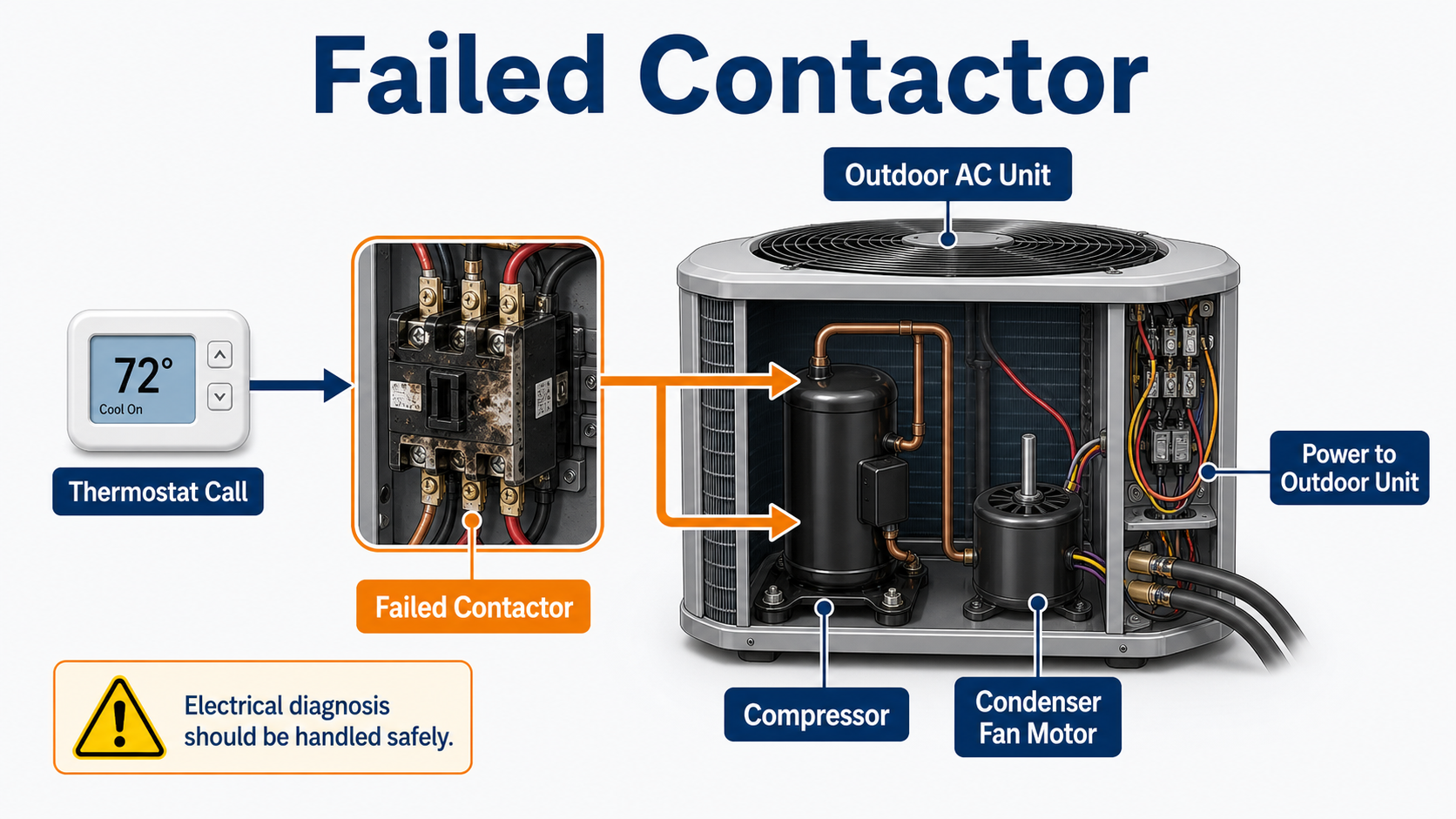
A failed contactor can prevent the outdoor unit from starting or shutting off correctly.
The contactor is an electrical switch inside the outdoor unit. When your thermostat calls for cooling, the contactor pulls in and allows power to flow to major outdoor components.
If the contactor is pitted, burned, stuck, or not pulling in properly, the outdoor unit may not start. In some cases, the opposite can happen: a stuck contactor can keep parts of the system running when they should shut off.
Because a failed contactor involves line-voltage electrical components, this is not a DIY repair. If the outdoor unit will not start, starts unpredictably, or behaves strangely after the thermostat is satisfied, schedule professional AC repair.
2. Bad AC Capacitor
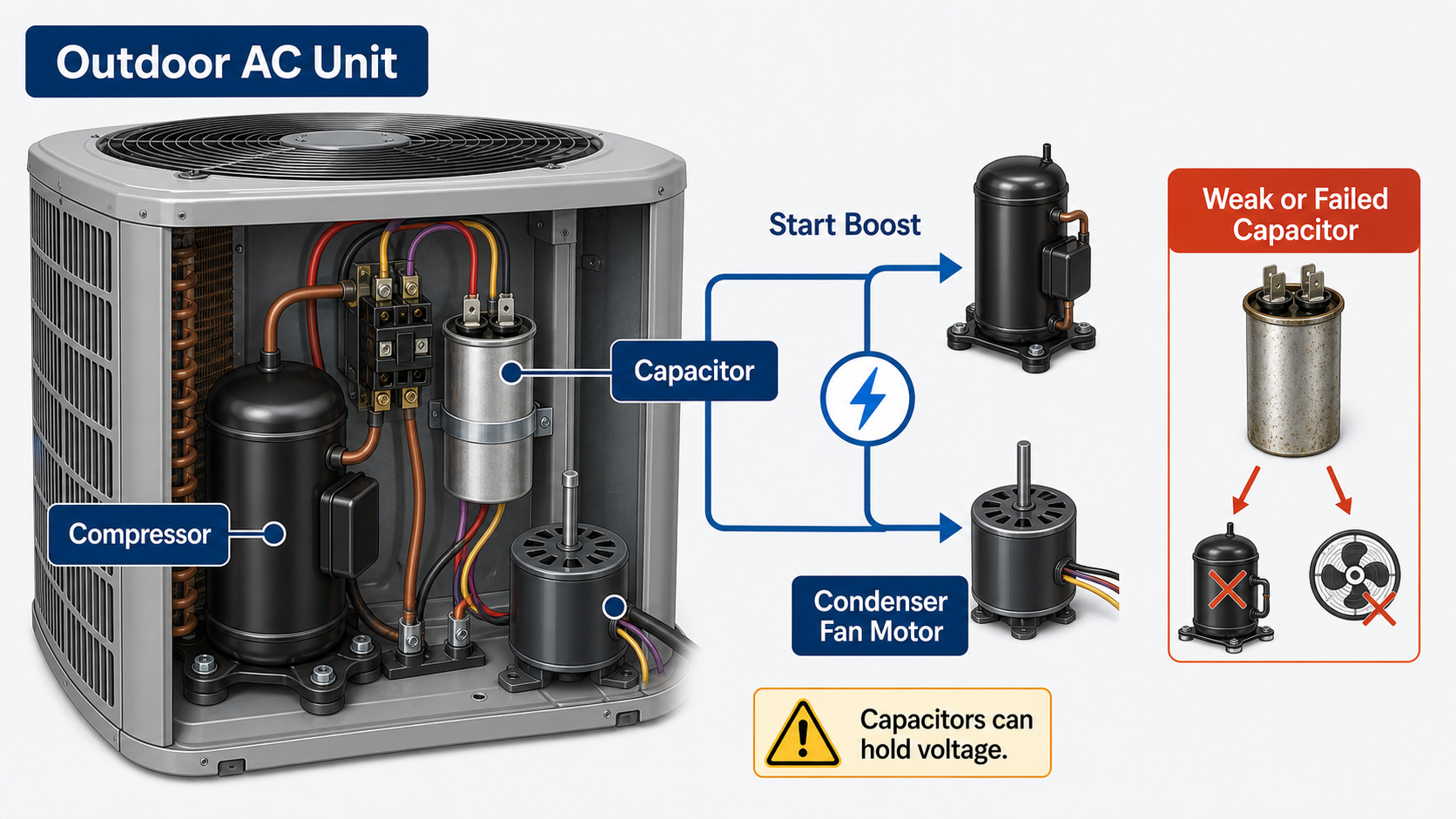
A weak or failed capacitor can keep the compressor or condenser fan motor from starting correctly.
A capacitor gives the compressor and condenser fan motor the electrical boost they need to start and run properly. When it fails, your outdoor unit may hum or buzz while the fan sits still.
This is one of those small parts that can create a big homeowner headache. The part may be small, but it can hold a high-voltage charge even after the power is off, so it should be tested and replaced safely.
We wrote a deeper guide here: Outdoor AC Unit Humming but Fan Not Spinning? It Could Be the Capacitor.
3. Condenser Fan Motor Failure

A failed condenser fan motor can prevent heat from leaving the outdoor unit and may strain the compressor.
The condenser fan moves air across the outdoor coil so the system can release heat from your home. If that fan motor fails, the outdoor unit can overheat, cooling performance drops, and the compressor may be put under serious strain.
Homeowners may notice the outdoor unit running without the fan spinning, a hot cabinet, a humming sound, or warm air at the vents. If the outdoor fan is not running, turn the system off and call for service. Letting it continue to run can turn one repair into a larger problem.
4. Refrigerant Leak or Low Refrigerant
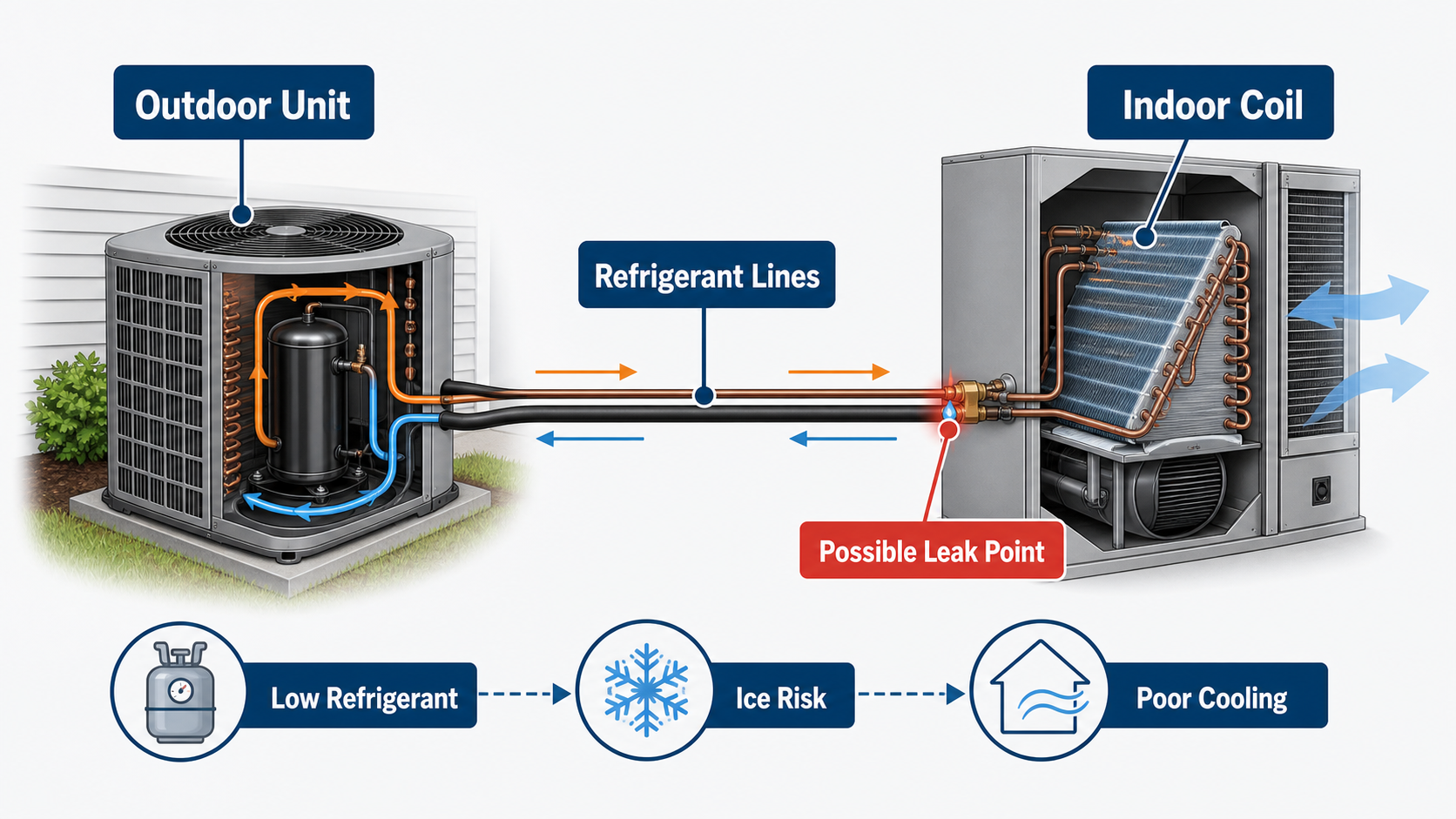
Low refrigerant usually points to a leak or system issue that needs proper diagnosis.
Your air conditioner should not need refrigerant added every year. Low refrigerant usually means there is a leak, damaged coil, loose fitting, rubbed refrigerant line, or another issue that needs to be diagnosed. A refrigerant leak is not the same as a dirty filter or a weak capacitor. It affects the system’s ability to absorb and release heat, and it can put extra stress on the compressor.
Warning signs can include warm air, long run times, ice on refrigerant lines, hissing near the equipment, higher energy bills, short cycling, or a system that used to cool well but now struggles on hot afternoons.
The refrigerant conversation is also changing because of federal HFC phasedown rules. Many existing residential systems use R-410A, and those systems can still be serviced when repair makes sense. But new residential cooling equipment is moving toward lower-GWP refrigerants under EPA technology-transition rules, which is one reason older systems with major refrigerant leaks deserve a more careful repair-versus-replacement conversation.
For homeowners, the practical takeaway is simple: do not treat refrigerant as a seasonal “top-off.” A technician should check the charge, look for evidence of a leak, evaluate the coil and line set, and explain whether repair is sensible based on system age, refrigerant type, leak location, warranty status, and overall equipment condition. If the leak is severe, recurring, or tied to an older system, AC installation and replacement may be the better long-term option.
For background on the federal refrigerant transition, see the EPA’s HFC technology transitions information.
5. Dirty Air Filter or Airflow Restriction
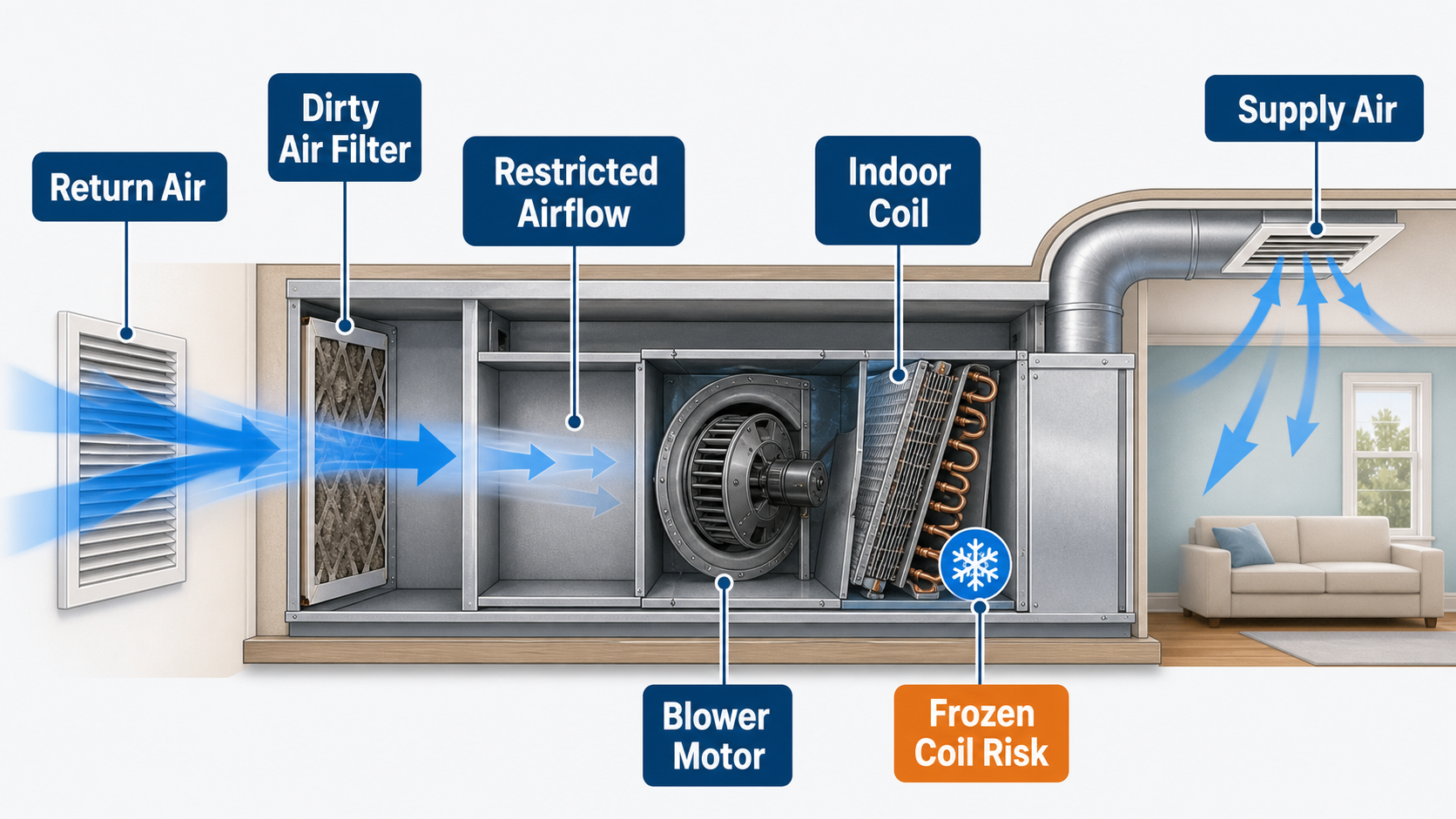
A dirty filter can restrict airflow, reduce comfort, and increase frozen coil risk.
A dirty air filter can seem minor, but airflow problems can cause serious cooling issues. Restricted airflow can make the system run longer, cool unevenly, freeze the indoor coil, strain the blower motor, and reduce comfort throughout the house.
Start with the basics: check the filter. If the filter is clean but airflow is still weak, the issue could involve the blower, ductwork, indoor coil, return air path, or system setup.
Helpful related reads: Change Your Air Filter Regularly and How Poor Airflow Spells Trouble For Your AC.
6. Dirty Coils
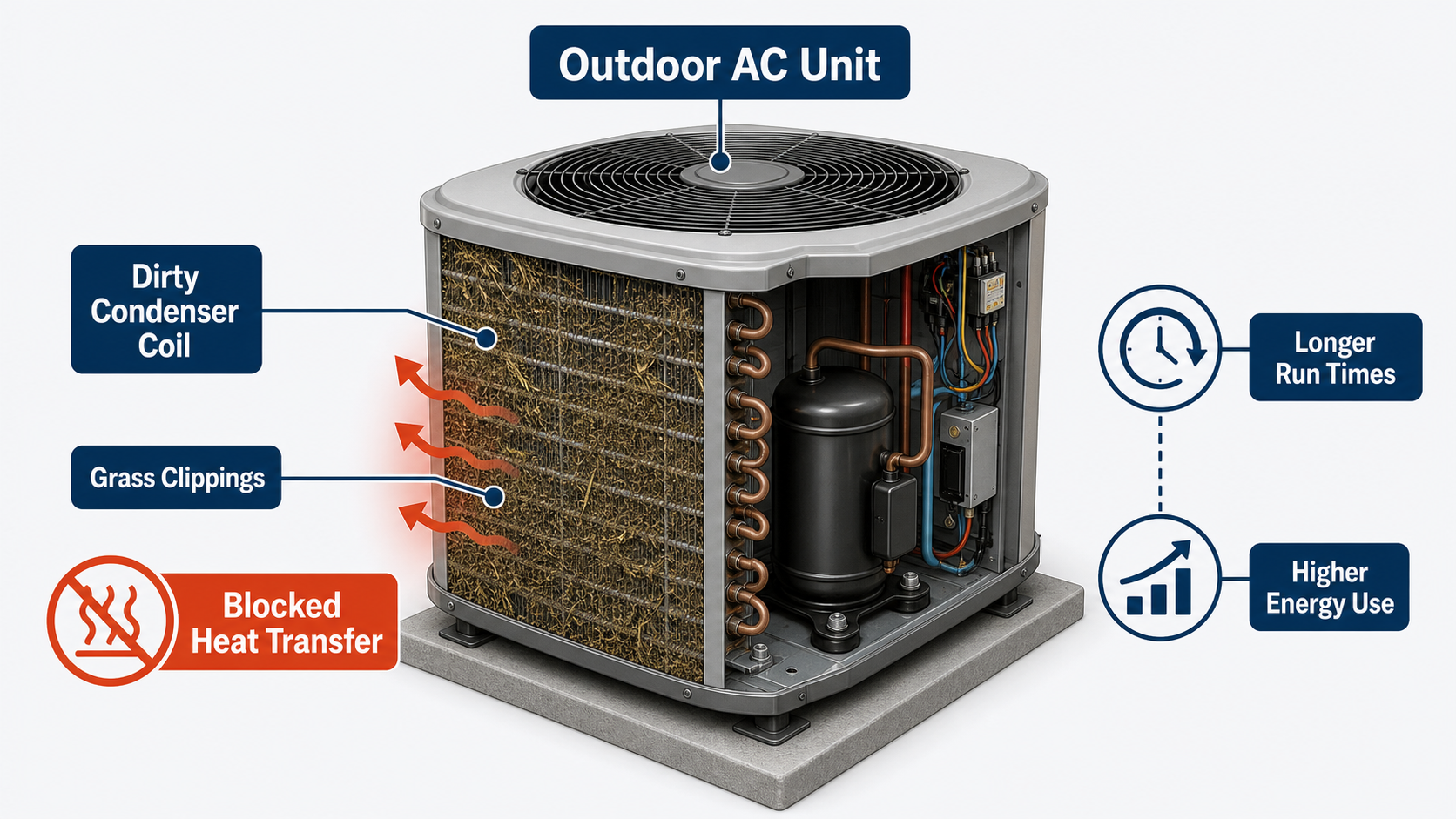
Dirty condenser coils make it harder for the outdoor unit to release heat.
Your indoor and outdoor coils are where heat transfer happens. When coils are coated with dirt, grass clippings, cottonwood, pet hair, dust, or debris, the system has to work harder to move heat.
Dirty coils can cause poor cooling, higher energy use, longer run times, frozen coils, and extra stress on expensive components. This is one of the reasons routine AC tune-ups matter before peak cooling season.
7. Clogged Condensate Drain
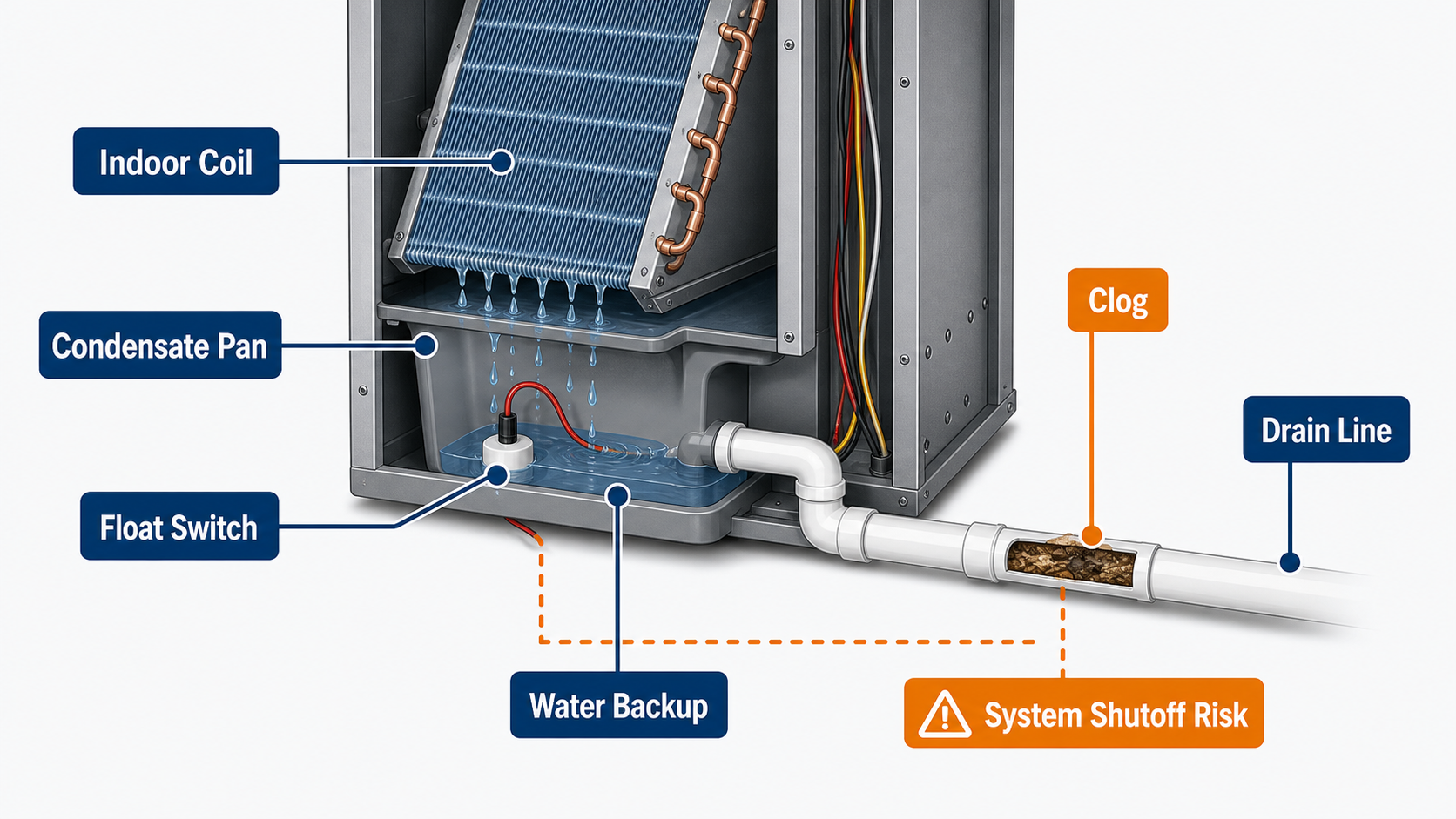
A clogged condensate drain can back up water and trigger a safety shutoff.
Air conditioners remove humidity as they cool. That moisture has to drain away from the system. If the condensate drain line clogs, water can back up, trip a safety switch, create musty odors, or cause water damage near the equipment.
If your system suddenly shuts down and you see water near the indoor unit, the drain system may be involved. Hillside can clear the line, inspect the drain pan, and check whether the float switch is doing its job.
8. Thermostat or Control Problems
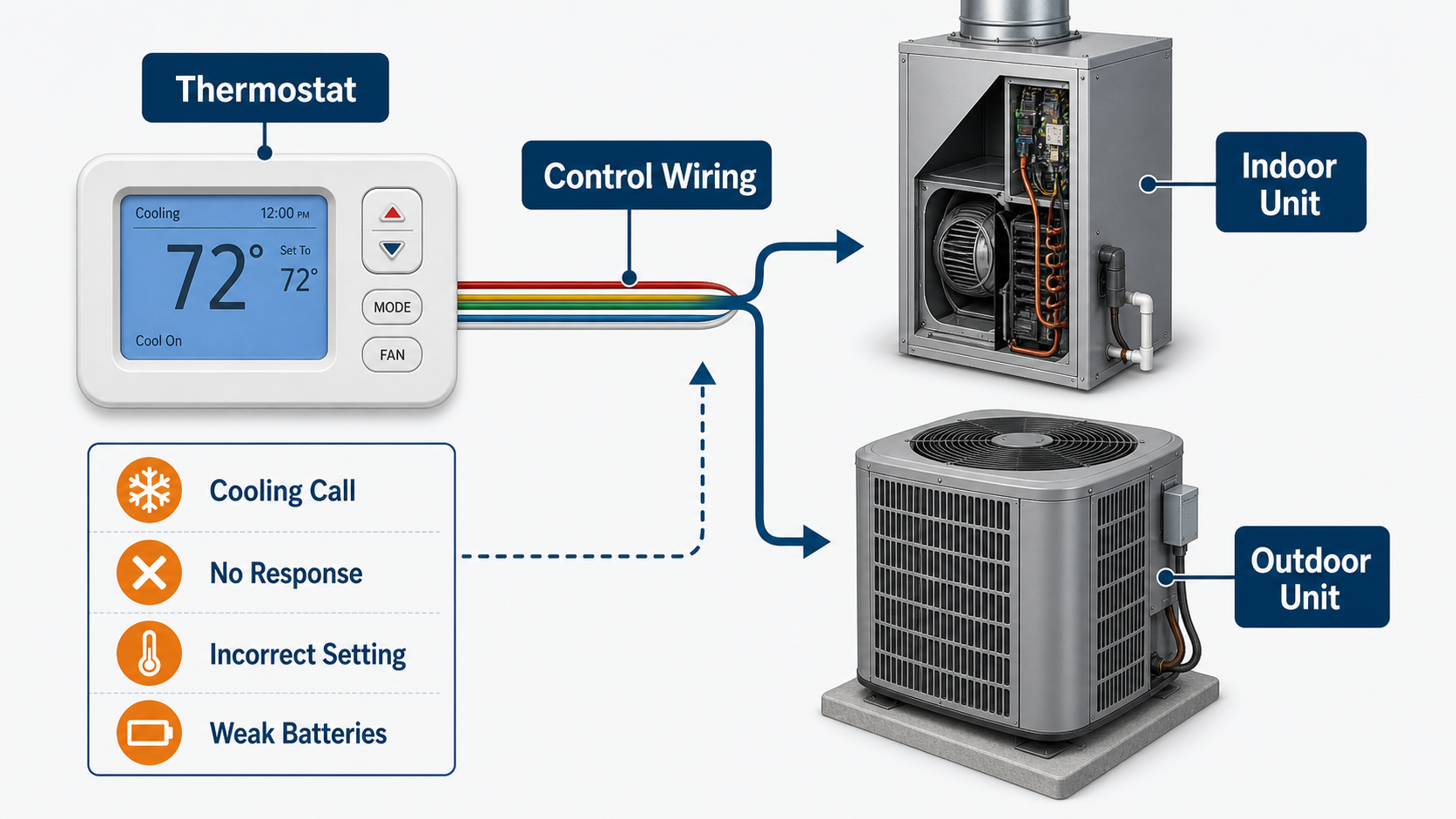
Thermostat or control issues can prevent a cooling call from reaching the indoor and outdoor equipment.
Sometimes the air conditioner is not the only suspect. A thermostat issue, loose control wire, bad sensor location, weak batteries, or incorrect settings can cause short cycling, no cooling call, or comfort problems that look like equipment failure.
If the thermostat screen is blank, settings changed unexpectedly, or the system does not respond to commands, it is worth checking the obvious settings first. If the issue continues, Hillside can trace the controls and confirm whether the problem is with the thermostat or the HVAC equipment.
9. Compressor Trouble
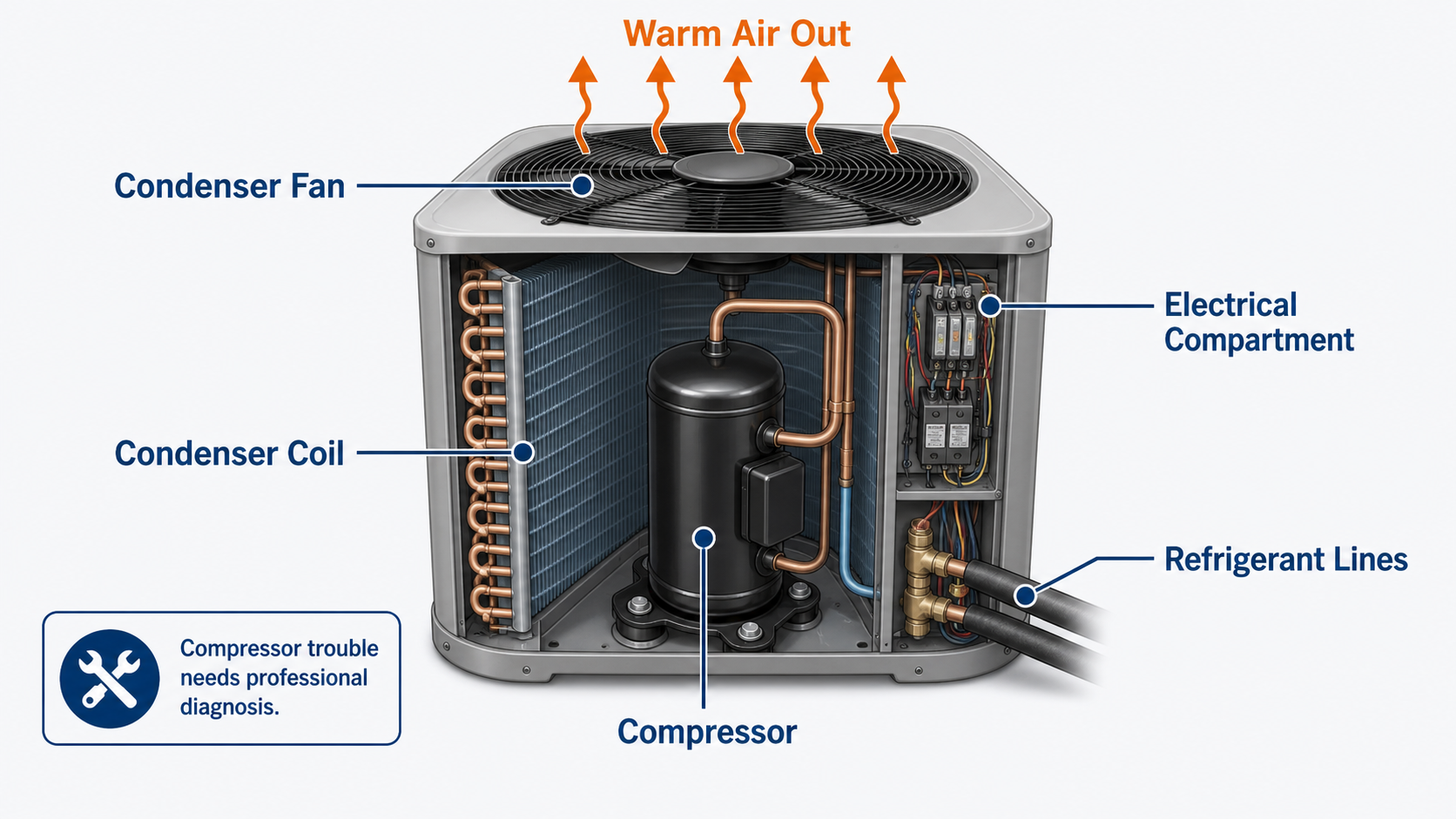
The compressor sits inside the outdoor unit and should be diagnosed before assuming replacement.
The compressor is one of the most important and expensive parts of a central air conditioning system. Compressor issues can show up as hard starts, breaker trips, loud operation, poor cooling, or an outdoor unit that will not run correctly even after other electrical components test properly.
Not every compressor symptom means immediate replacement, but this is where age, repair history, refrigerant type, warranty status, and overall system condition matter. If the repair is large and the system is older, it may be smart to compare repair costs with AC installation and replacement.